Bathla Group Collapse: A Finance Survival Guide for Subcontractors, Suppliers and Trade Partners
Bathla Group, one of Sydney’s largest developers of lower-cost housing, is on the brink of liquidation. If your business supplied materials, labour, appliances or trade services to Bathla - or to any of its related entities - this guide covers exactly what’s happened, what it likely means for your cash flow, and the finance options that can carry your business through the shortfall while the administration process plays out.
If you’ve already been told a payment is delayed, held, or “subject to the outcome of administration,” don’t wait to see how it unfolds. Talk to Go For Broker now about a line of credit or short-term facility so unpaid invoices don’t turn into missed payroll, damaged supplier trust, or a hit to your own credit file.
What happened to Bathla Group?
Bathla Group - trading through its main entities Universal Property Group and Raj & Jai Construction - entered voluntary administration on 25 August 2026, with advisory firm Teneo appointed administrator. Founder Bhart Bhushan described the situation as a “perfect storm,” pointing to softening sales, changes introduced in the federal government’s May 2026 budget, falling confidence in key markets, and rising construction costs.
The numbers are large by any measure:
Universal Property Group carried liabilities of roughly $3.2 billion.
Raj & Jai Construction, the group’s building arm, owed a further $304 million.
Bathla had close to 2,000 homes under construction, with around 13,000 more in its development pipeline and claims of a much larger forward pipeline across NSW.
350 staff had reportedly gone unpaid for up to eight weeks.
Roughly 1,000 buyer deposits may have been held by the business, with administrators confirming some deposits had already been used under contract terms.
Administrators asked the NSW government for a $20 million emergency lifeline last week; that request was declined. A further attempt to secure funding from lenders on 1 September also fell short, and Teneo’s Stephen Longley said the firm was “running out of hope for a holistic solution” and would begin planning to wind the business down.
Some individual sites are being kept alive where a private credit lender has stepped in directly - for example, lender PAG has committed to continue funding contractors on a 312-apartment project in Pemulwuy. But that is the exception, not the rule, and contractors on that same site say they still have no clarity on what happens to bills already outstanding.
Who is being financially impacted?
If your business touched a Bathla project in any capacity, you’re likely exposed in one or more of these ways:
Subcontractors and trades (electricians, plumbers, tilers, painters, joiners) with unpaid invoices for completed work, and crews stood down mid-project with no clear restart date.
Suppliers and manufacturers - particularly appliance and kitchen suppliers - left holding stock built to Bathla’s specific floorplans that can’t easily be resold, or chasing payment for goods already delivered to site.
Materials and equipment hire companies owed for deliveries, with equipment still sitting on now-inactive sites.
Professional services firms (surveyors, engineers, project managers) owed fees for work already completed.
Smaller trade businesses with thin cash reserves, where even a 60–90 day payment gap can mean missed wages, missed BAS or super obligations, or a strained relationship with your own suppliers.
If this is you, you’re not alone - and you’re not powerless. The businesses that come through a builder collapse in the best shape are usually the ones that act on their financing before the gap becomes a crisis, not after.
How much am I likely to recover, and how long will it take?
This is genuinely hard to answer this early, and anyone who gives you a confident number right now is guessing. In a formal liquidation, unsecured creditors - which is where most subcontractors and suppliers sit - are paid only after secured lenders, employees’ entitlements and administration costs are settled. Recovery rates for unsecured creditors in large construction insolvencies are frequently a fraction of what’s owed, and the process to even establish a final creditor payout can run for many months.
What that means practically:don’t build your near-term cash flow plan around getting paid what you’re owed on any particular timeline.Plan for the gap instead.
What can you do right now to protect your business?
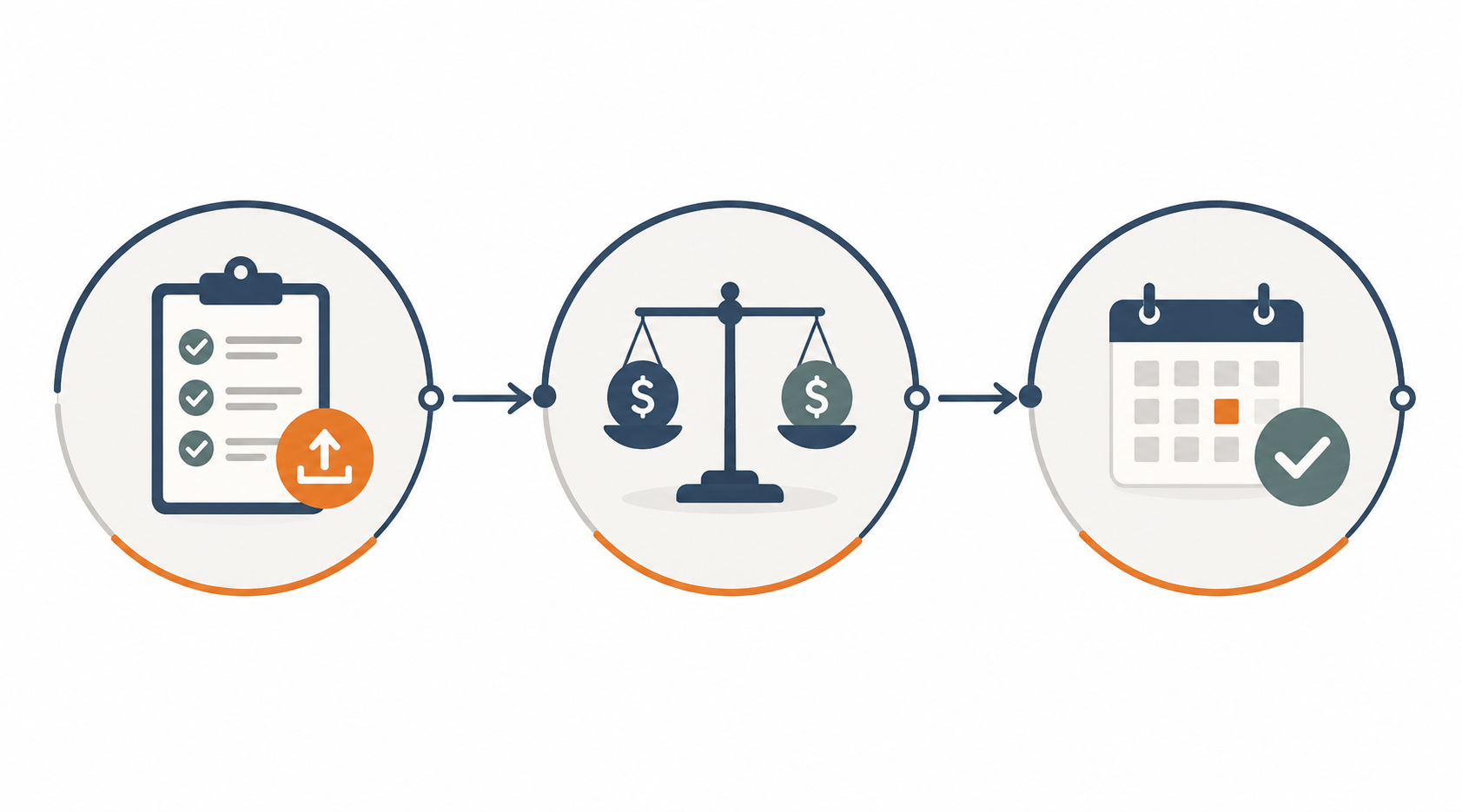
1. Lodge your claim and get everything in writing
Register as a creditor with the administrator (Teneo) as soon as a formal creditors’ meeting is called, and keep every invoice, purchase order, delivery docket and email trail. This documentation will also strengthen any finance application you make in the meantime.
2. Separate the debt problem from the cash flow problem
The money owed to you and the money you need to keep operating are two different problems that need two different solutions. Chasing the debt is a legal and administrative process. Keeping your business funded while that plays out is a finance decision - and it’s one you can act on today.
3. Get on the front foot with finance, before you’re forced to
Businesses that wait until payroll is due or a supplier account is overdue end up applying for finance under pressure, often with fewer options and worse terms. Lenders look far more favourably on a business that arranges a facility proactively than one applying in crisis. Setting up access to funds now - even if you don’t draw on it immediately - protects your trading history and your own credit rating if a payment gap does hit.
What finance options are available to businesses affected by the Bathla collapse?
Business line of credit
A revolving line of credit gives you access to funds up to an agreed limit, which you draw down only when you need it and repay as invoices come in from other clients. It’s often the best first move for a business facing an unpredictable payment gap, because you’re not committing to a lump-sum loan you may not fully need.
Unsecured business term loan
A lump-sum facility, typically repaid over a fixed term, useful for covering a known shortfall - for example, bridging several weeks of payroll or supplier payments while a specific claim works through administration. Many Australian lenders can approve unsecured facilities without property security, based on trading history and cash flow.
Invoice or debtor finance
If you’re owed money on invoices from other, unaffected clients, invoice finance lets you draw down against those invoices immediately rather than waiting the usual 30–60 days, freeing up cash without touching the Bathla-related debt at all.
Equipment and asset finance
If tools, vehicles or plant are tied up on a stalled Bathla site, asset finance can fund replacement equipment so you can keep taking on other work rather than sitting idle waiting for site access.
Bridging finance
For businesses with a specific, time-limited gap - such as waiting on a defined milestone payment or an insurance/retention release - a short-term bridging facility can be more cost-effective than a longer-term loan.
How do I protect my own credit rating through this?
This is the part many trade businesses underestimate. If a Bathla-related shortfall causes you to miss payments to your own suppliers, the ATO, or a business loan repayment, that becomes a mark on your credit file - separate from, and outlasting, the Bathla debt itself. Arranging finance now to bridge the gap is often the difference between a temporary cash flow hiccup and a lasting credit problem that makes it harder to get finance in future.
Get help now {#get-help-now}
Go For Broker works with subcontractors, suppliers and trade businesses across NSW to arrange finance quickly - often within days, not weeks - including lines of credit, unsecured term loans, invoice finance and asset finance. If you’ve supplied labour, materials or services to Bathla Group or any of its related entities and you’re worried about the payment gap ahead, get in touch before it becomes urgent. We’ll walk you through what you actually qualify for and how fast it can be in place.
This article is general information only and does not constitute financial or legal advice. If you are a creditor of Bathla Group, Universal Property Group or Raj & Jai Construction, seek your own legal advice regarding your rights in the administration process, in addition to arranging your own working capital.